

Plastic-Free Electric Kettle
Buyer's Guide
What makes an electric kettle plastic-free?
A kettle where the entire water pathway — lid underside, steam channel, spout filter, and inner chamber — contains zero polymer, adhesive, or silicone in contact with water. Every surface that touches liquid or steam is 304/316 stainless steel, verified by independent lab testing.
This guide is published by SAKI. We test every kettle against the same criteria we apply to our own products — and we name the kettles that fail.
Tested first-hand · independent migration data · updated 2026
Material Science
304/316 stainless steel and certified ceramics: the materials that stay inert against boiling water, heat cycle after heat cycle, with no polymer to break down.
Global Certifications
FDA, California Prop 65, and LFGB Section 30/31 — beyond marketing claims, explained through independent lab standards.
Hidden Plastic Points
Even a kettle labeled “stainless steel” can hide plastic in four critical spots. We map the entire water pathway.
 Written byArda Deveci·Product Director, Saki ProductsUpdated June 17, 2026
What's really happening at the boiling point?
“BPA-Free” labels don't override the laws of thermodynamics. At 100°C, polymer structures begin to degrade; particles that pass into the water surface are measured in the millions per milliliter. The two figures below represent some of the most robust findings published in the past three years.
4–29M
Microplastics / liter — Vienna
According to research from the Medical University of Vienna, boiling temperatures increase the amount of particles released from plastic surfaces into water. In kettles with limescale buildup or surface scratches, this number can multiply significantly.
Source: MUW, Polymer Migration Studies 2024
12M
Nanoparticles / ml — Queensland
The number of particles released during the first boil of a new plastic kettle. On average, a 250 ml serving contains roughly 3 billion nanoparticles (about 12 million per millilitre). This is the so-called ‘burst release’ phase.
Source: University of Queensland, npj Emerging Contaminants, 2025
Why ‘BPA-free’ isn’t enough for a boiling kettle
Food-contact safety tests are usually conducted at room temperature. However, boiling cycles repeated 5–10 times a day create micro-cracks within the polymer matrix and trigger the release of VOCs (Volatile Organic Compounds).
Which materials are safe for boiling water?
Only three inert materials can safely come into contact with boiling water. Everything else — plastic indicators, silicone seals, unglazed ceramics — carries varying levels of risk.
Stainless Steel
Completely inert. Since it does not transmit light, it prevents algae and bacterial growth. Durable and resistant to breakage. Only 304 or 316 grade steel should be considered; lower-quality steels may leach nickel and chromium.
Borosilicate Glass
Resistant to thermal shock. It does not react with metals or chemicals, making it ideal for visual control. However, attention must be paid to the junction between the base and the body, where silicone adhesives are often used — this is typically the weakest point in terms of sealing.
Ceramic
Scratch-resistant and a naturally stable material. It retains heat effectively. For safety, the glaze must be free from lead and cadmium and certified through XRF testing.
What ‘stainless steel’ actually means: 304, 316, 316L
Steel quality is defined by small differences in the ratios of chromium, nickel, and molybdenum. If your water supply is low quality, or if you live in regions with chlorinated or acidic water, these differences become critical.

Grade
304
Grade
316
Grade
316L

The hidden weak points in glass and ceramic kettles
Glass and ceramic are not automatically safe just because they are labeled "plastic-free." Risk lies in the details — at sealing points, beneath the glaze. Three columns tell the full story.
The Glass & Silicone Dilemma
Borosilicate glass is flawless on its own. However, in electric kettles, the connection between the metal base and the glass body is typically achieved using silicone sealing compounds.
Even high-quality silicone may remain stable at 100°C, but it still creates a non-metal surface that comes into contact with water.
Ceramic & Glaze Quality
Ceramic is an excellent heat-retaining material. However, XRF (X-ray Fluorescence) tests can reveal heavy metals in the glaze layer. More critical are leach tests conducted under California Prop 65 standards.
A reliable ceramic kettle must prove that it does not release lead or cadmium under 1% nitric acid and 4% acetic acid exposure.
Complete Water Path Integrity
A truly plastic-free water path means every contact point — including the lid interior, steam channel, filter, gasket, and level indicator — is made entirely of steel or glass.
Independent ISO/IEC 17025 lab testing confirmed no detectable heavy metals, PFAS, phthalates, or bisphenols (BPA/BPS/BPF) in the product tested.
Global Regulations
Only three inert materials can safely come into contact with boiling water. Everything else — plastic indicators, silicone seals, unglazed ceramics — carries varying levels of risk.
FDA
U.S. Food & Drug Administration
Ensures materials are safe for food contact under U.S. regulations.
Prop 65
California Proposition 65
Requires a warning when a product contains listed chemicals above set limits. The warning covers the whole product, so check which component it refers to.
LFGB
German Food, Articles of Daily Use, and Feed Code
The most comprehensive standard in the world. Tests for taste, odor, and migration — ensuring your water stays pure, always.
The four places plastic hides in a kettle
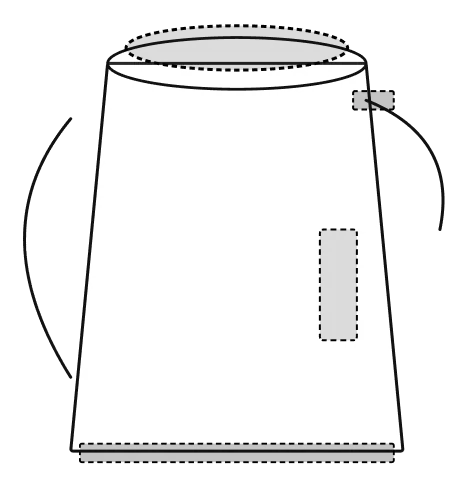
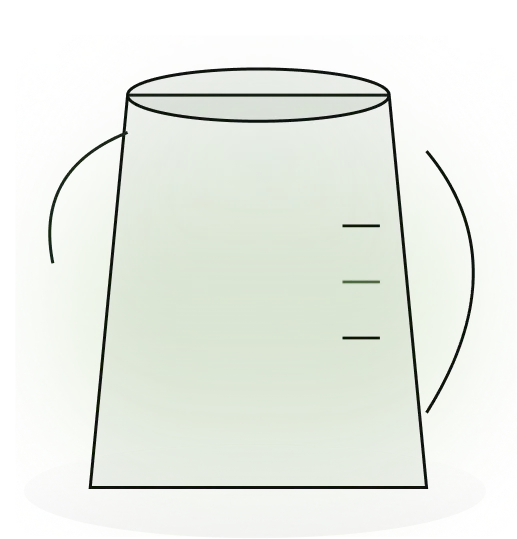
On most kettles sold as 'stainless steel', water or steam still meets plastic at a handful of specific points. These are the four zones worth inspecting before you buy.
Lid Underside
The underside of the lid, though appearing steel, is usually plastic. Rising steam hits this surface, condenses, and drips VOCs directly back into your water.
Water Window
Plastic windows are bonded to the steel body with silicone adhesives. Under constant thermal stress, micro-cracks and lime deposits accumulate over time.
Spout Filter Frame
The frame holding the mesh filter is typically plastic and makes direct contact with boiling water every time you pour.
Bottom Basket
The silicone joint between the heating plate and side walls can develop micro-leaks and particle migration risk as it ages.
Pure Lid
The underside of the lid and all condensation surfaces are made of 304/316 stainless steel. Steam never comes into contact with any polymer surface at any stage.
Welded Spout
The filter is directly integrated into the body and made of stainless steel. It contains no plastic brackets or inserts.
Stamped Markers
Eliminates the risk of plastic viewing windows entirely. Water levels are read through internal embossing on the steel body — a "blind" design approach.
Welded Base
The base is laser-welded to the body. No rubber ring, gasket or adhesive at the joint.
How a plastic-free kettle solves all four points.
A genuinely plastic-free kettle closes every one of those gaps. Here is how each of the four contact points should be engineered.
Reliability matrix
After analyzing numerous models across the market, kettles fall into four distinct categories. Approximately 90% of standard market products sit in the bottom two tiers.
Verified and Certified
The Verified
Flawless material selection verified by independent ISO/IEC 17025 lab testing. Zero polymer parts in contact with water; heavy metals, PFAS, phthalates and bisphenols all non-detect.
Typical Signs: ISO/IEC 17025 lab-tested · 100% polymer-contact-free water path · Independent lab test report (COA)
Visually Clean
The Visual Pass
No plastic in contact with water (Unibody steel chamber). However, laboratory migration reports are unpublished. A budget-friendly practical solution.
Typical Signs: Unibody steel chamber · Unpublished migration report · Lacks independent lab approval
Disappointments
The Heartbreakers
Great technology and design, but uses silicone or plastic in critical areas. Despite the premium price, it cannot meet the promise of absolute purity.
Typical Signs: Submerged silicone gaskets in base sensors · Inner lid and hinge plastic · Invisible adhesive seams
The Ones to Avoid
The Runaways
Contains plastic water windows, glued glass seams, or internal plastic coatings in contact with water. 90% of standard market products fall into this category.
Typical Signs: "BPA-Free" marketing · Transparent plastic body · Unglazed ceramic

The kettle we independently tested
In the Tier matrix (Section 9), we mentioned alternatives like Ottoni Fabbrica Alice and Secura SWK-1701DB. However, the only device for which we have first-hand testing data and control over the manufacturing process is the model this guide is written about: SAKI's Luna plastic-free kettle.

Luna Electric Kettle Pro
Turkish-American hybrid engineering developed with the design discipline derived from medical device infrastructure.
The model that gathers every technical criterion in this guide into a single device.
How to care for a plastic-free kettle
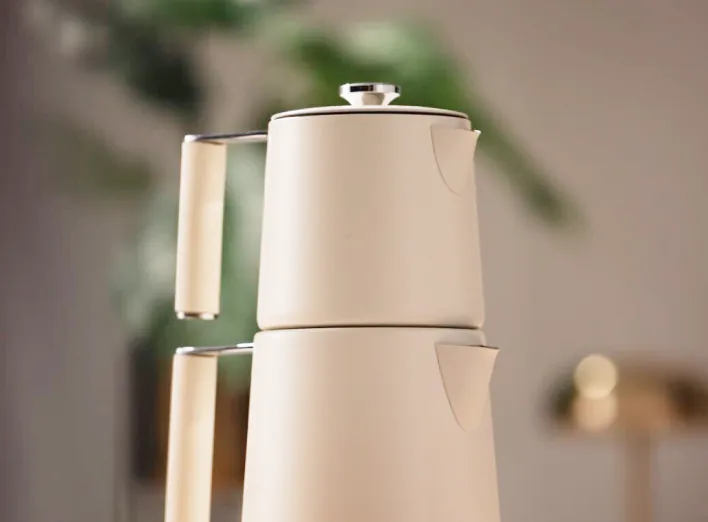
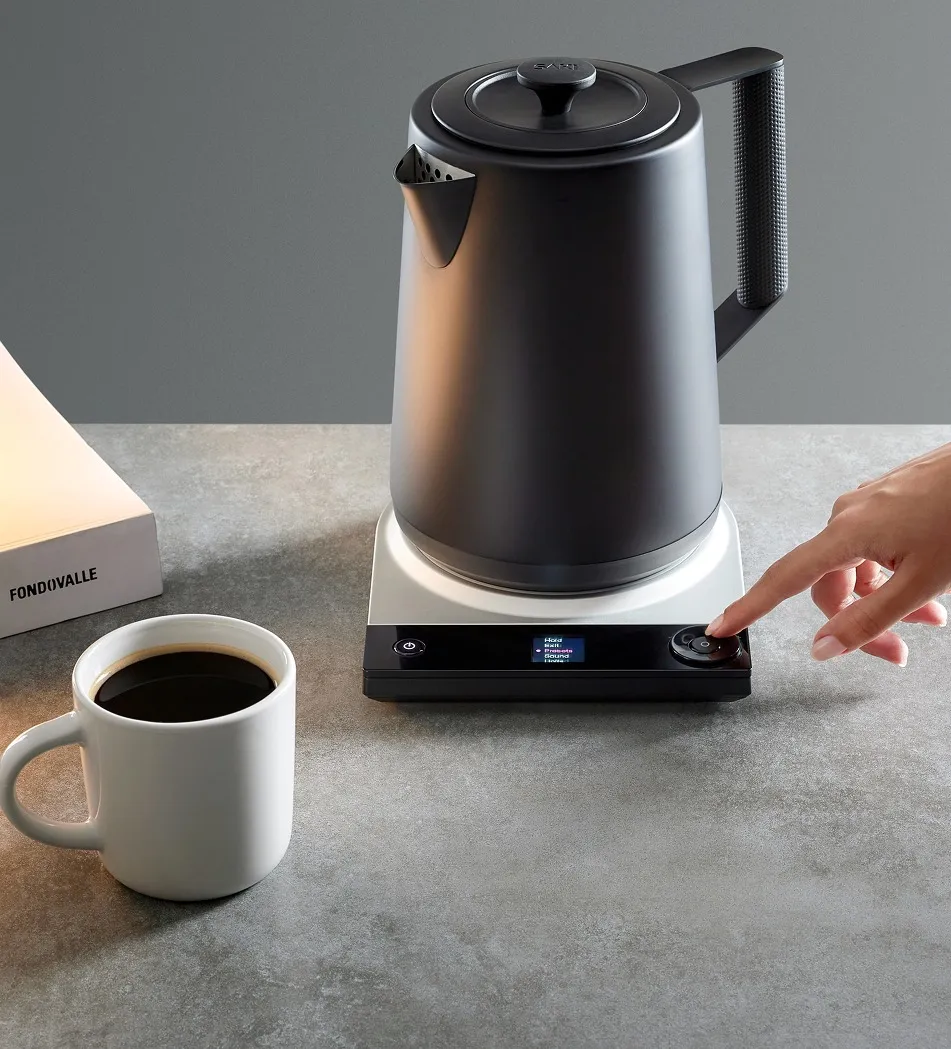
Even an all-steel kettle performs best with a simple routine. Here is how to keep the water path clean, scale-free, and inert over time.
Natural Descaling
Avoid chloride-based descalers, which can pit stainless steel. Use the descaler included with your kettle, or a natural option: lemon juice, citric acid or white vinegar. Rinse well afterward.
Practical Recipe
Boil 1 part white vinegar + 3 parts water in a full kettle. Let it sit for 5 minutes, then rinse. Apply once a month.
Inspect the Underside of the Lid
Rising steam should only hit metal or glass, never plastic. If the inner lid is matte black plastic — walk away.
Reject the Water Window
Traditional transparent gauges guarantee leaks, limescale, and adhesive (siloxane) degradation. Opt for internally stamped measurements.
Demand a Test Report
Don't trust "BPA-Free" marketing. Ask for a report from an independent, ISO/IEC 17025 accredited lab. If the manufacturer won't share it, be suspicious.
Verify the Steel Quality
"Stainless steel" is an insufficient term. Look for 304, 316, or 316L classification in the specs. This indicates non-magnetic austenitic steel suitable for food contact.
About the Author
Arda Deveci
Product DirectorSaki Products · Newport Beach, California
Product Director at Saki Products since 2019, leading strategic product development and growth initiatives. Background in Business Administration from Pepperdine Graziadio Business School. Focuses on delivering products that balance innovation with measurable impact.
View on LinkedIn